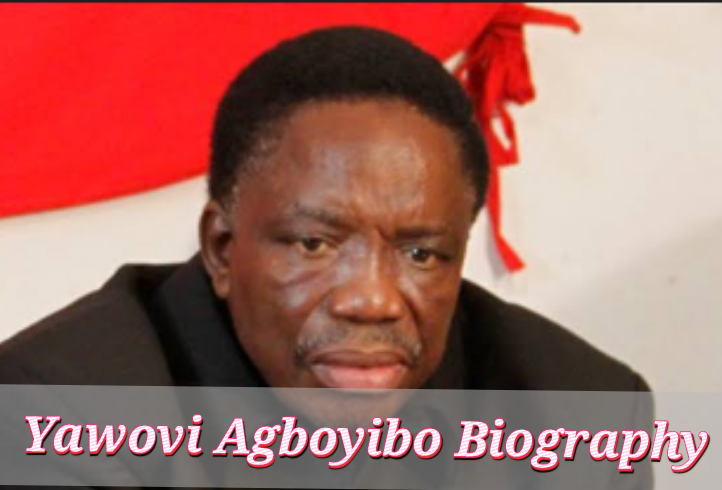
Yawovi Agboyibo Biography
Yawovi Agboyibo was a key figure in Togo’s political history. He worked as a lawyer and fought for human rights and democracy. Born on December 31, 1943, in the small town of Kouvé in Togo’s Yoto Prefecture, he grew up during a time when Togo was moving toward independence from colonial rule. Agboyibo became known for his strong stand against unfair government practices. He served as Prime Minister of Togo from September 16, 2006, to December 6, 2007. He also led the Action Committee for Renewal, a political party he helped create in 1991. Agboyibo passed away on May 30, 2020, in Paris, France, at the age of 76 after a short illness. His life story shows how one person can push for change in a country facing political challenges. This biography looks at his journey to help readers understand his role in Togo’s development.
Togo, a small West African nation, has had a complex political past. After gaining independence from France in 1960, it faced years of single-party rule under leaders like Gnassingbé Eyadéma, who held power from 1967 until his death in 2005. Agboyibo entered politics during this era, focusing on fair elections and human rights. His work helped open doors for more open discussions in Togo. Readers can learn from his example about the importance of standing up for justice, even when it is hard. His story also highlights how education and law can be tools for social change.
Yawovi Agboyibo Early Life
Yawovi Madji Agboyibo came into the world on December 31, 1943, in Kouvé, a rural area in southern Togo’s Yoto Prefecture. His parents were Soklou Agboyibo and Doafio. Growing up in a modest family, he experienced life in a community where farming and local traditions played a big role. Togo at that time was still under French control as part of French West Africa, but independence was on the horizon. Young Agboyibo saw the shifts as Togo became free in 1960.
As a child, he learned values like hard work and community support from his family. The area around Kouvé was known for its mix of ethnic groups, including the Ewe people, who make up a large part of southern Togo. This setting likely shaped his views on unity and against tribal divisions later in life. There are no detailed records of his very early years, but it is clear he grew up in a time of change. By the 1950s, Togo was preparing for self-rule, and education became more important for young people like him.
Agboyibo’s early experiences taught him about the need for fairness. He saw how colonial rules affected daily life, which may have sparked his interest in law and rights. As he grew older, he moved to bigger towns for better opportunities. This simple start in a small village set the foundation for his future as a leader who cared about ordinary people.
Yawovi Agboyibo Education
Agboyibo’s education path was straightforward and focused on law. In June 1965, he earned his baccalauréat in philosophy from the Collège Moderne in Sokodé, a town in central Togo. This high school diploma opened doors for higher studies. He then went to the University of Dakar in Senegal, a popular choice for West African students at the time.
By June 1968, he completed a license in private law there. He also studied economics alongside law, gaining a broad view of how laws affect society and money matters. Dakar was a center for African intellectuals, and his time there exposed him to ideas about independence and human rights. After finishing, he returned to Togo to practice law in the capital, Lomé.
His education equipped him with skills to challenge unfair systems. He learned to argue cases and understand legal systems, which he later used in politics. This background made him a strong voice for change in Togo.
Yawovi Agboyibo Personal Life
Details about Agboyibo’s personal life are limited, as he kept much of it private to focus on his public work. He was born to Soklou Agboyibo and Doafio, but little is known about siblings or extended family. As an adult, he lived mainly in Lomé, where he built his career as a lawyer.
He did not often share family details in public, but his life showed a commitment to his roots in southern Togo. Agboyibo faced health issues later in life, leading to his death on May 30, 2020, in Paris, France, after a brief illness. He was 76 years old. His passing was mourned by many in Togo, who saw him as a symbol of hope.
In his personal time, he wrote books like “Combat for a Democratic Togo” in 1999, sharing his thoughts on politics. He also dedicated a book in February 2010 about governance in Africa, showing his interest in bigger ideas. Agboyibo’s life balanced public service with quiet reflection, making him relatable to many Togolese people.
Yawovi Agboyibo Net Worth
Information on Yawovi Agboyibo’s net worth is not publicly available. As a lawyer and politician in Togo, his income likely came from his legal practice in Lomé and salaries from government roles. He served as Prime Minister from 2006 to 2007, which would have provided a official pay, but exact figures are not recorded.
Politicians in Togo do not often disclose wealth, and there are no reports of him having large businesses or investments. His focus was on public service, not building personal riches. Estimates are hard to make without data, but his lifestyle seemed modest, fitting for someone dedicated to human rights. In West Africa, leaders like him often rely on professional earnings rather than vast fortunes.
Yawovi Agboyibo Career
Yawovi Agboyibo’s career spanned law, human rights, and politics over many decades. He started as a lawyer in Lomé after his studies in 1968. By the 1980s, he entered public life. In March 1985, he won a seat in the National Assembly as an independent candidate from Yoto Est, getting 82.63 percent of the vote under the single-party rule of the Rally of the Togolese People.
On June 9, 1987, the government created the National Commission for Human Rights, and Agboyibo became its president when it started on October 21, 1987. He held this role until 1990, working to protect people’s rights during a time of strict control. In 1990, he was re-elected to the National Assembly, serving until it dissolved in 1991.
Agboyibo joined groups like the Togolese League of Human Rights. From December 1990 to 1991, he led the Committee of Action against Tribalism and Regionalism, fighting divisions in society. In 1991, he turned the Front of Associations for Revival into the Action Committee for Renewal, or CAR, a new opposition party. He became its national president, a position he held until 2008.
He took part in the National Conference from July to August 1991, pushing for democracy. From 1991 to 1992, he served on the High Council of the Republic, acting as a temporary legislature. Between 1990 and 1995, he was on the Vatican’s Pontifical Council for Justice and Peace. On May 12, 1993, he received the first German Africa Award for his work on rights and democracy.
In August 1993, Agboyibo planned to run for president but withdrew on August 22, along with Edem Kodjo, due to concerns about fake voter lists. They boycotted the election, and Gnassingbé Eyadéma won easily. In February 1994, Agboyibo won a National Assembly seat from Yoto-Centre as a CAR candidate. His party and allies had a majority at first, but after some seats were canceled, Eyadéma named Kodjo as prime minister in April 1994, which Agboyibo saw as wrong.
From 1994 to 1999, he led the CAR group in the Assembly. In 1996, he became president of the Union of African Parties for Democracy and Development, holding it until 2004. In 2005, he was vice-president of its West Africa branch.
On April 18, 1998, CAR chose him as its candidate for the June 1998 presidential election. He called for delays due to problems and rejected Eyadéma’s win on June 24, saying Gilchrist Olympio really won. Official results gave Agboyibo 9.54 percent, third place.
In 1999, he led CAR in the Inter-Togolese Dialogue. On January 10, 2001, he pushed for new elections to follow a 1999 agreement. But on August 3, 2001, a court sentenced him to six months in prison for defaming Prime Minister Agbeyome Kodjo over claims of militia ties. More charges came on September 27, 2001, linking him to 1997 crimes. He was freed on March 14, 2002, by Eyadéma for reconciliation.
In the June 1, 2003, presidential election, Agboyibo got 5.12 percent, third place, but claimed fraud and said opposition candidates did better. For the April 2005 election after Eyadéma’s death, he coordinated opposition but called it a fake process on April 23 due to violence.
On April 22, 2006, he became president of the Inter-Togolese Dialogue bureau, lasting until August 20, 2006. This led to his appointment as prime minister on September 16, 2006. He formed a 35-member government on September 20, 2006, including opposition members for unity.
In October 2007, he won a Assembly seat from Yoto as CAR candidate, one of four for his party. He resigned as prime minister on November 13, 2007, saying his job was done. Komlan Mally took over on December 6, 2007. Agboyibo did not take his Assembly seat, letting a substitute do so.
At the October 2008 CAR congress, he stepped down as president, replaced by Dodji Apévon. This was rare in Togo and seen as a sign of humility. On January 15, 2010, CAR named him its candidate for the March 2010 presidential election. He placed third with 2.96 percent.
Agboyibo’s career showed dedication to fair politics. He wrote books like one in 1999 on democratic fights and another in 2010 on African governance, stressing dialogue over self-interest.
Yawovi Agboyibo Controversies
Agboyibo faced several tough situations in his career. On August 12, 1997, attackers stole his car and hurt his driver in Lomé’s Be-Gbenyedji area. In November 1997, he was assaulted in Bafilo before a CAR meeting, with blame on soldiers and officials.
In 1998 and later elections, he often boycotted or challenged results. For the 1993 vote, he withdrew on August 22 due to voter list issues. In 1998, he rejected Eyadéma’s win on June 24, claiming fraud. In 2003, he disputed his third-place finish on June 1, saying opposition won.
A major issue was his arrest. On August 3, 2001, a court convicted him of defaming Prime Minister Agbeyome Kodjo over militia claims from 1998, sentencing him to six months and a 100,000 CFA franc fine. On September 27, 2001, added charges linked him to 1997 crimes in Sedome. Groups like FIDH on August 23, 2001, and Amnesty International on November 28, 2001, called the trial unfair due to judge bias and quick jailing. An appeal in January 2002 helped, but he stayed in prison until Eyadéma freed him on March 14, 2002, for national peace.
In 2005, he called the April election violent and fake on April 23. These events showed tensions in Togo’s politics, but Agboyibo always pushed for talks.
Yawovi Agboyibo Legacy
Yawovi Agboyibo left a strong mark on Togo. He is remembered as a fighter for human rights and democracy during hard times. His role in creating the National Commission for Human Rights in 1987 helped start talks on protections. Leading CAR from 1991 to 2008, he built a party focused on renewal and unity.
His prime ministership from 2006 to 2007 brought opposition into government, aiding peace after 2005 unrest. The 2006 dialogue he led set up fairer elections in 2007. Awards like the German Africa Prize on May 12, 1993, showed global respect for his work.
Agboyibo taught humility by stepping down in 2008. His books shared ideas on better governance, inspiring young leaders. In Togo, he is seen as a bridge-builder in a divided nation. His death in 2020 led to tributes for his peaceful approach. Today, his ideas influence ongoing calls for fair politics in West Africa.
Conclusion
Yawovi Agboyibo’s life was about service and change. From his birth in 1943 to his death in 2020, he worked to make Togo better. As a lawyer, rights advocate, and leader, he faced challenges but stayed committed. His story teaches the value of education, dialogue, and standing firm. Readers can see how one person’s efforts can shape a country. Agboyibo’s work reminds us that democracy needs constant effort.
FAQs
What was Yawovi Agboyibo’s main political role?
He served as Prime Minister of Togo from September 16, 2006, to December 6, 2007, and led the Action Committee for Renewal party from 1991 to 2008.
When and where was Yawovi Agboyibo born?
He was born on December 31, 1943, in Kouvé, Yoto Prefecture, Togo.
What education did Yawovi Agboyibo have?
He got a baccalauréat in philosophy in June 1965 from Collège Moderne in Sokodé and a license in private law in June 1968 from the University of Dakar.
Did Yawovi Agboyibo face any legal troubles?
Yes, he was sentenced to six months in prison on August 3, 2001, for defaming a prime minister, but was released on March 14, 2002.
What award did Yawovi Agboyibo receive?
He won the first German Africa Prize on May 12, 1993, for his human rights work.
How did Yawovi Agboyibo die?
He passed away on May 30, 2020, in Paris, France, at age 76 after a short illness.
What party did Yawovi Agboyibo found?
He transformed the Front of Associations for Revival into the Action Committee for Renewal in 1991.
Was Yawovi Agboyibo involved in elections?
Yes, he ran in presidential elections in 1998, 2003, and 2010, often challenging results due to concerns about fairness.
What books did Yawovi Agboyibo write?
He wrote “Combat for a Democratic Togo” in 1999 and dedicated another on African governance in February 2010.
What is Yawovi Agboyibo’s legacy in Togo?
He is known for promoting democracy, human rights, and political dialogue in a challenging environment.